
Aerospace CNC Machining in China: Materials, Documentation, and Tolerance Planning
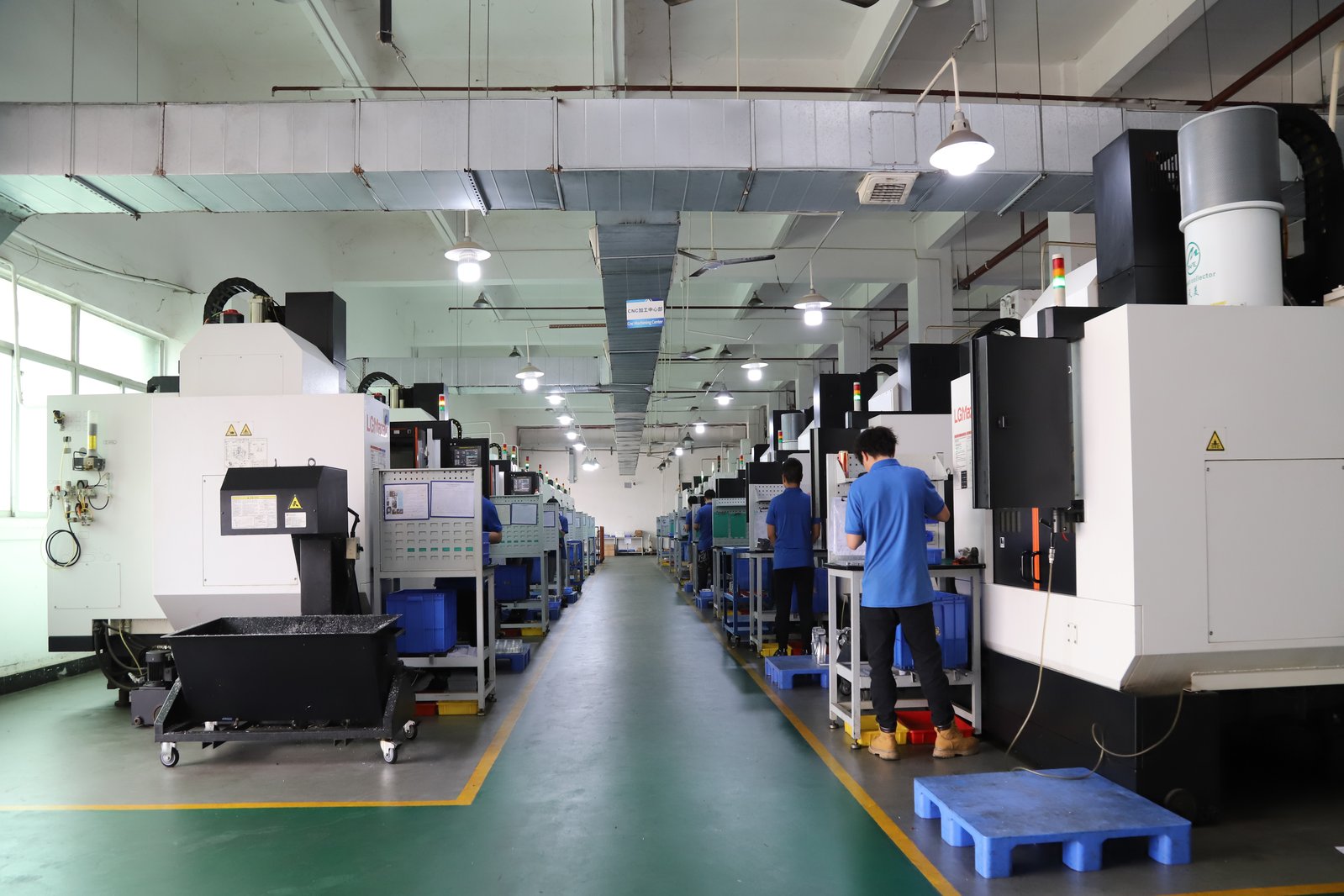
Sourcing aerospace machining from China changes the buyer's job in one specific way: the distance makes verification harder, so the paperwork has to do more work. The material, the tolerance, and the documentation are not three separate decisions — they are one chain of evidence that has to survive a border crossing. This guide walks a buyer through that chain in the order it actually matters: which alloys to specify for a machined aerospace part, how to tolerance it so the drawing is buildable and checkable, and which documents have to ship with the parts so the evidence arrives with the metal.
Why does aerospace sourcing from China turn on documentation as much as machining?
Aerospace is the one industry where the paper is part of the product. The alloy claim means nothing without the mill certificate; the tolerance claim means nothing without a dimensional report mapped to the drawing datums; the quality claim means nothing without a certificate you can verify with the registrar. When the factory is in another country, you cannot walk the floor on a Tuesday afternoon, so the documentation is not a formality — it is the audit you run from your desk. The suppliers worth keeping in aerospace sourcing are the ones whose paperwork is produced by the process, not assembled for the shipment.
That is the buyer's angle on the same discipline a serious shop runs internally: every lot is traceable to its material, every critical dimension is measured against the drawing, every claim has a record behind it. The practical rule for a sourcing decision is to ask for the documentation list with the quote, not after the parts ship. If the material certificate, the CMM report, and the capability data are not in the price, they will not be on the crate, and for an aerospace part, parts without evidence are parts that cannot be used.
Which aerospace alloys should a China machining RFQ actually name?
Name the grade and the temper or condition — "aluminum" is not a spec, and a China RFQ is the last place to leave material open to interpretation, because a substitution made at quoting stage is hard to catch across an ocean. The grades below cover most machined aerospace work, and they are chosen for how they cut as much as for how they fly:
| Alloy | Typical machined use | Machining behavior | Buyer notes |
|---|---|---|---|
| 6061-T6 / -T651 | Brackets, housings, non-critical structure | Excellent; predictable and fast | The default aerospace machinable aluminum; cheap and easy to verify by XRF |
| 7075-T6 / -T7351 | Highly loaded fittings and structure | Good; harder than 6061 but still aluminum-friendly | Higher strength; temper matters for stress-corrosion resistance |
| Ti-6Al-4V | Fasteners, structural hardware, thin-wall parts | Poor relative to aluminum; work-hardens and holds heat | Slower cycle times; require the mill cert and confirm the bar source |
| 17-4PH (S17400) | Actuators, valves, fittings needing strength plus corrosion resistance | Good in annealed Condition A; aged afterward | Specify the final condition (H900–H1150) on the drawing |
| Inconel 718 | Engine and high-temperature static parts | Difficult; severe work-hardening | Reserve for real high-temperature duty; verify heat treatment records |
| 304 / 316L stainless | Hardware, ducting, non-structural fittings | Fair; work-hardens if the tool rubs | More a hardware material than a structural one in aerospace |
Two sourcing-specific habits keep quotes honest. First, require the supplier to confirm the raw material source and condition in the quote, so the mill certificate that ships matches the bar that was cut. Second, resist exotic alloys for the sake of the label — if the load case is aluminum, machining time and material cost drop by an order of magnitude, and the fatigue and corrosion story is easier to document. Aerospace material selection is about evidence for the load, and evidence is cheaper to produce when the material is a standard aerospace grade.
How tight should you tolerance an aerospace part being machined in China?
The tolerance question for an offshore supplier is the same as for a local one, with one extra layer: the general tolerance has to be explicit, because the shop is working from your drawing, not from a standing relationship. A blanket ±0.05 mm over the whole part forces the shop to treat cosmetic surfaces like bearing seats, and a blanket ±0.01 mm says you have not decided which features are critical. The discipline that works: leave the general tolerance where the part is not sensitive, then tighten only the features that carry function, with GD&T so the datum scheme is explicit and measurable.
What a capable machining floor holds, stated plainly, is ±0.003 mm on milling and turning, ±0.002 mm where the feature is precision-ground, and process capability of Ppk ≥ 1.67 at the initial study on the key characteristics you flag. That last number matters more than the nominal tolerance when the factory is far away, because it says the process holds the dimension across the run rather than one part happening to measure in tolerance. For compound surfaces on 5 axis work, profile-of-a-surface callouts against the datums are the right tool, and the inspection report should report measured deviation, not a pass/fail tick.
Two cautions travel particularly well across an ocean. Titanium and aluminum both move with temperature, so critical dimensions should be verified at a defined temperature and the report should say so. And the datum scheme on the drawing must match the way the part will be held and measured — a datum that exists only on the model, not on the machined part, guarantees a dispute that takes weeks to resolve by email. When you mark the few characteristics that need the tight band and the Cpk study, the shop can plan the run around them instead of treating the whole part as critical.
What documentation should an aerospace machining order from China ship with?
For an offshore order, documentation is the bridge the parts cross on. The list below is the one to put in the RFQ so there is no negotiation after the parts are made:
- Material certificate. The mill's EN 10204 3.1 certificate — or 3.2 with third-party witnessing — with chemistry, mechanical properties, and the heat or lot number. No mill cert, no traceable material; that is the rule from the first order.
- Certificate of conformance. The supplier's signed statement that the parts meet the drawing. Useful, but it is a declaration, not evidence on its own.
- Dimensional inspection report. CMM results for the characteristics you flag, reported against the drawing datums, with measured deviations on contoured features rather than ticks.
- First article inspection. Where the contract requires it, an AS9102-style report verifying every drawing characteristic on a representative part before production commits.
- Capability data on key characteristics. Ppk ≥ 1.67 initial from an initial run, showing the process holds the dimension across the batch.
- Process certificates. Heat-treatment records, surface-finish measurements, and special-process records for work routed outside the mill.
The traceability logic matters as much as the papers: every part number should trace to the heat or lot that produced its material, so that if a mill issue surfaces later the affected serials are identifiable in minutes. The quality and inspection page on this site shows the dimensional evidence this factory produces as routine — it is the standard to hold any offshore supplier to.
How do you check a China machining supplier's aerospace quality claims before you commit?
Aerospace quality expectations are tiered, and knowing your tier is the first check. Primes and their tier-1 suppliers commonly require an AS9100 quality system, AS9102 first-article reporting, and often NADCAP approvals for special processes such as heat treatment and surface finishing. A build-to-print machine shop that is ISO 9001:2015, IATF 16949:2016 (product design excluded) and ISO 14001:2015 certified can serve prototype, development, and many production aerospace parts, but if your contract chain demands AS9100 or NADCAP, that has to be said in the RFQ, because it changes the supplier list rather than just the paperwork. Industry standards are the buyer's gate, not a marketing phrase, and they apply the same to a factory in Dongguan as to one in Dayton.
When the quality bar is met on paper, verify the practice from your desk. Ask for a redacted sample of the reports you will receive — a CMM report with the datum scheme visible, a material certificate with the heat number, a capability study on a tight dimension. Ask which alloys the shop has actually machined, because Inconel experience is not aluminum experience. Ask how a ±0.003 mm milling tolerance and a ±0.002 mm ground feature are verified and with what equipment. And ask who reviews the drawing before the quote — with a supplier in China, the answer to that question is also a test of English engineering communication, which is the real currency of an offshore relationship.
How should prototypes and first articles flow into an offshore production run?
The failure mode in aerospace sourcing is approving a prototype and assuming the production run inherits everything it proved. It does not unless you say so, and when the production run is offshore, the cost of the assumption is measured in weeks and shipping, not days. The clean sequence: machine the prototype or first article, run the full inspection against every drawing characteristic, and get written approval on the measured results before the production quantity is committed. The same material spec, the same program, the same datum scheme should carry into production; any of those changing means the first article no longer represents the run.
Once parts are moving, control shifts to process stability. Key characteristics should have a sampling plan and a Cpk target of ≥ 1.67, so a dimension drifting toward the limit is caught before it produces a bad batch that has to cross an ocean to be quarantined. Drawing revisions need the same discipline — a revision that arrives silently halfway through a run invalidates the inspection records for everything before it. Keep the revision letter on the PO, on the drawing, and on the reports, and the traceability stays intact from prototype through production, exactly as it would with a domestic supplier.
What belongs in an aerospace machining RFQ to a China supplier?
An RFQ that produces comparable quotes is a small document with specific content. Send a STEP or IGES model plus a 2D PDF that names the material grade and temper, the general tolerance, and the GD&T on the characteristics that matter. State the quantity and the target date, and flag which documents must ship with the parts — material certificate, FAI, capability data, special-process records. If you operate under a quality clause or an approved-supplier list, attach the requirements so the shop can confirm it can meet them before quoting rather than after. And state the commercial terms — incoterm, shipping method, currency — so the quotes you compare are comparing machining, not freight arithmetic.
Two things make offshore aerospace quotes noticeably better. First, say which characteristics are key: a drawing that flags the features that need the tight band and the Cpk note costs the same to quote as one that marks nothing, but it tells the shop where the effort goes. Second, ask the supplier to confirm its incoming material control — the chain from mill certificate to incoming verification to the part on the shelf is what makes your traceability real across a border. For the program and quoting overview, the services page on this site covers what the RFQ stage includes, and the FAQ page answers the diligence, lead-time, and documentation questions buyers raise most often when sourcing from China.
Frequently Asked Questions
Is AS9100 certification required for aerospace parts machined in China?
Not for every part — it depends on your tier in the supply chain and the criticality of the part. Primes and tier-1 suppliers commonly require AS9100 and AS9102 first-article reporting, and NADCAP for special processes. A machine shop holding ISO 9001:2015, IATF 16949:2016 (product design excluded) and ISO 14001:2015 can serve many prototype and production aerospace parts, but if your contract demands AS9100 or NADCAP, state it in the RFQ so suppliers can qualify or decline honestly.
Can a factory in China hold aerospace tolerances?
Yes — tolerance is a function of machine, tooling, and inspection discipline, not geography. The numbers to plan around are the same as anywhere: ±0.003 mm on milling and turning, ±0.002 mm on ground features, with Ppk ≥ 1.67 at the initial study on key characteristics and Cpk ≥ 1.33 on general characteristics. Capability is reported per characteristic: every report names the feature, its tolerance band, the sample size, the sigma method, and the study window. What geography adds is the verification burden: require the dimensional reports and capability data in the RFQ so the evidence arrives with the parts.
Which aerospace alloys should I avoid specifying for a China machining RFQ?
None by location — standard aerospace grades like 6061, 7075, Ti-6Al-4V, and 17-4PH are all machinable in China and all verifiable by material certificate. What you should avoid is leaving the grade or condition unspecified, because an offshore shop working from an ambiguous drawing is harder to correct than a local one. Name the grade, the temper, and the raw material expectation in the RFQ.
What is the difference between a material certificate and a certificate of conformance?
A material certificate comes from the mill and carries the chemistry, mechanical properties, and heat or lot number — the evidence the material is what the drawing says. A certificate of conformance is the supplier's signed declaration that the parts meet the drawing. For aerospace work sourced offshore, require both and treat the mill certificate as the traceable one.
How do I verify a China supplier's quality system from my desk?
Ask for the certificate numbers and check them with the registrar, since certificates are issued against a scope and an address. Then ask for redacted samples of the reports the supplier actually produces — a CMM report with the datum scheme, a material certificate with a heat number, a capability study. The pattern of the response tells you whether the quality system is a document or a practice.
What documentation should ship with an offshore aerospace first article?
The full evidence set: material certificate with the heat number, a dimensional report mapping the GD&T callouts to measured values against the drawing datums, surface-finish data on the features that matter, and the revision letter the part was built to. Approve that package in writing before the production quantity is committed, and the offshore distance stops being a risk.
Can thin-wall titanium parts hold tight tolerances when machined offshore?
Yes, within the physical limits of the wall — the machining strategy does most of the work, and the verification is what protects you. The drawing should mark which surfaces are functional, let thin-wall surfaces carry realistic tolerances, and the report should state the temperature at which critical dimensions were verified. The discipline is the same as with a domestic supplier; the paperwork simply has farther to travel.
Sourcing an aerospace machined part from China, and want the material, tolerance, and documentation decisions settled before you commit?
Send the model, the drawing, and the quantity. You will get back a material-and-tolerance read, the documentation package that will ship with the parts, and a delivery date that holds. Email [email protected] or call +86 13126536955.