
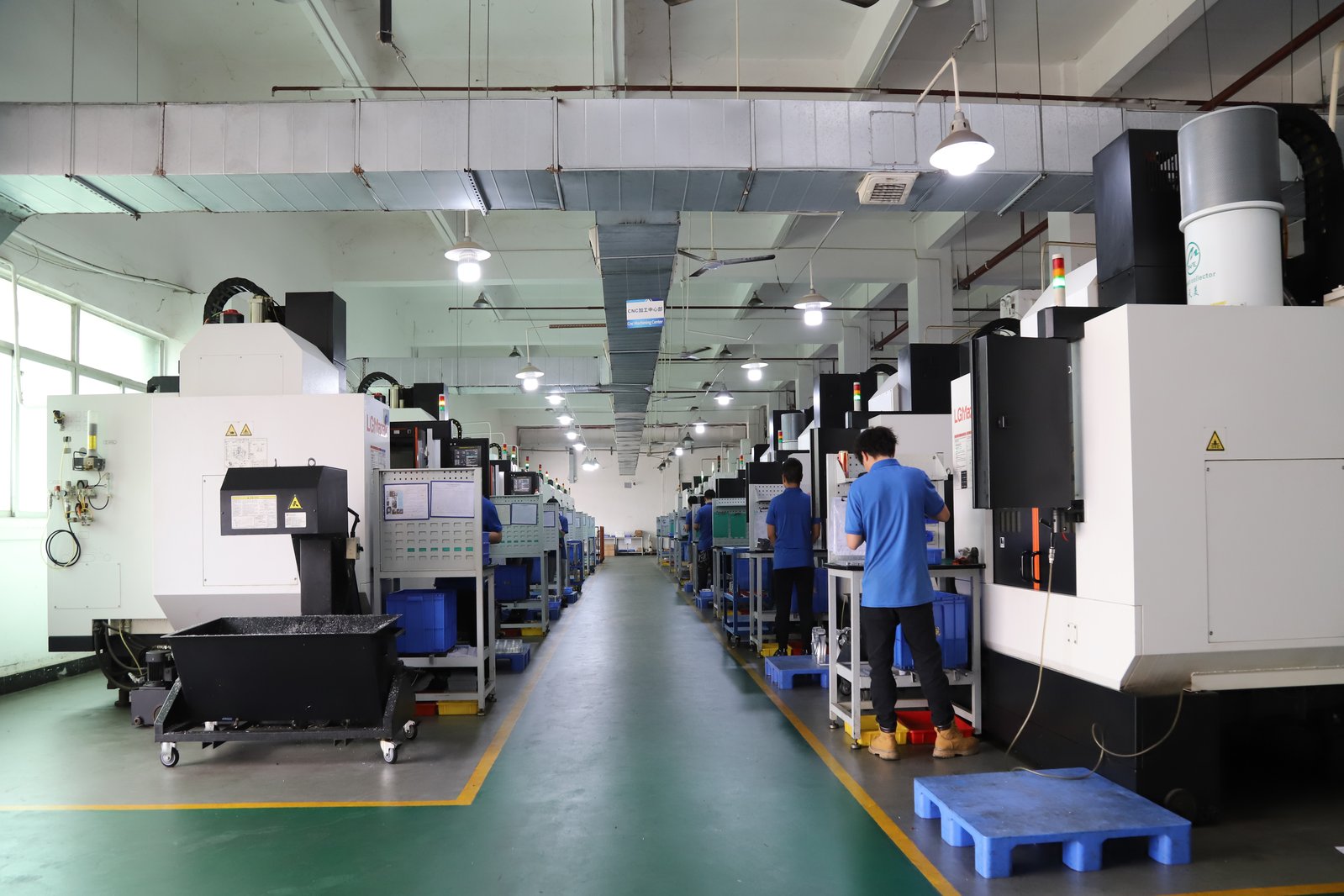
Sourcing CNC machining in China is not a different activity from sourcing locally; it is the same activity with the informal checks removed. A local buyer can walk over, look at the parts, ask the machinist a question, and catch a problem before it becomes a shipment. Across a distance, none of that is available, and everything must be verified through evidence: documents, photos, reports, and inspections. Distance does not change what a good order needs; it raises the bar for how much of it must be verified. This guide walks through the specific gaps that distance opens — language, documents, geometry, and shipments — and the verification that closes each one.
Why does distance raise the verification bar?
Distance converts trust from something you observe into something you construct. Locally, trust is built by seeing the shop run, meeting the machinist, and watching parts come off the machine; the informal observations fill the gaps that documents leave. At a distance, those observations are unavailable, and the gaps they used to fill must be filled with evidence instead. A buyer who sources at a distance without raising the evidence standard is running a local-risk operation on foreign soil, which is exactly how the distance surprises arrive.
The practical consequence is that verification moves earlier and becomes more formal. The supplier is verified before the order rather than after a visit; the drawing questions are answered in writing rather than over coffee; the inspection reports are specified in advance rather than discovered after shipment; and the pre-shipment gate is treated as a real gate rather than a formality. None of this is bureaucracy; it is the systematic replacement of observation with evidence, which is the entire discipline of buying at a distance. The services overview on this site's services page shows the scope a distant order has to cover, and the evidence standard is what makes that scope verifiable from another continent.
How does language change what needs verifying?
Language is the first gap, because specifications change meaning in translation. A material condition, a tolerance, or a finish described in loose terms becomes a different specification by the time it reaches the machine, and the difference is discovered at inspection — when the part is measured against the drawing you thought you sent. The problem is rarely dishonesty; it is the quiet drift that happens when a precise English specification is understood through an imprecise exchange.
The defense is to make the specification exact and written. Send the drawing with the grade, condition, tolerances, and finish stated in the document itself rather than in prose, and confirm the supplier's understanding of the key items in writing before any metal moves. Where a term carries risk — the material condition, the critical tolerance, the surface finish — ask the supplier to restate it in the quotation so both sides can see whether the meanings align. The confirmation is not about manners; it is the moment where a mistranslated specification becomes visible while it is still a sentence instead of a part.
What can you verify about geometry without holding the parts?
Geometry is verifiable from a distance, but only if the reports are built for it. A dimensional report tied to the drawing revision, listing every measured characteristic against its tolerance and naming the instrument for each, verifies geometry as well as a document can. The report proves the shop measured the parts and states the values; what it cannot prove is that the parts are the parts the report describes, which is where the other verification layers come in — photos, packing checks, and the first article shipped for your own hands.
The first article is the strongest geometry verification available at a distance, because it replaces evidence about the parts with the parts themselves. Shipping a sample for your own inspection costs a few days in freight and removes the entire question of whether the report describes the parts you will receive. For critical components, the first article in your hands before the production run is not a luxury; it is the only verification that completely closes the geometry gap, and its cost is trivial against the cost of a production lot made to a misunderstanding.
Which documents need the most care across the distance?
Every document that will end up in your file deserves care, but three carry the most risk. The material certificate must tie the delivered metal to the heat or lot, because a certificate that describes a category rather than a heat cannot be attached to the parts. The dimensional report must reference the approved revision, because a report against a superseded revision is evidence of nothing. And the packing list must match the shipment, because the quantity and the identity of what left the building is the foundation of everything that happens when it arrives. Three documents, three consistency checks, and the file has a spine.
Consistency between the documents is the test that matters most, because each document is checked against the others rather than in isolation. The certificate heat should appear in the lot record, the report's revision should match the approved drawing, and the packing quantity should agree with the shipment. A file whose documents contradict each other is a file whose supplier is not running one quality system, and consistency is the cheapest integrity test available at a distance, because it requires nothing except reading the documents together.
Specify the document language in the order, because your quality team and your auditors will read these documents in your language, and a translation problem in a certificate is a problem in the file. Confirm the formats at the quotation stage, and require the documents to travel with the shipment rather than arriving later by email. A document set that is specified in advance, written in your language, and shipped with the parts is a document set your receiving team can use on arrival; one that follows later in fragments is a document set your file will always be catching up with.
How do you verify a shipment before it leaves the supplier?
The pre-shipment gate is where distance concentrates the most leverage, because it is the last moment the parts are close enough to correct. The gate combines the dimensional report for the lot, dated photos of the parts with the report, the material certificate, and the packing list — all tied to the order. The balance payment should release against this evidence, not against the parts leaving the building, because the gate is the point where the shipment is still reachable and a problem is still fixable at the source.
Dated photos are the quiet workhorse of the gate. A photograph of the parts on the inspection table with the report beside them, taken the day of the check, ties the evidence to the lot in a way that words cannot match. It will not show a hidden bore or an internal thread, but it confirms the batch exists, is finished, and is being inspected, which closes the most common gap between documents and reality. Where the order is critical, add a video pan across the parts or a close-up of the markings, and the pre-shipment gate becomes something close to being there.
For large quantities, consider staging the gate: the first finished portion is checked, photographed, and released while the rest of the batch continues. Staging lets you confirm the process is producing to the drawing before the entire run is committed to freight, and it turns one large risk into two smaller ones. The freight premium of a partial shipment is usually trivial compared with the cost of discovering a systemic problem after the whole lot has left the building.
What role do third-party inspections play at a distance?
Third-party inspection is the buyer's eyes at the shop when the buyer cannot travel. A qualified inspector can verify critical dimensions against the drawing, check the material documents against the delivered stock, examine the surface condition, and photograph the lot — all on your behalf, at a defined moment in the order. The inspection report becomes an independent layer in your file, and the independence is its value: it is not the supplier reporting on its own work, which is the inherent weakness of every self-reported document.
Third-party inspection is a cost, and it should be applied where the risk justifies it: first orders with new suppliers, critical components, high-value lots, and the moments before the balance payment. On a proven repeat order of a simple part, the cost may not pay for itself; on a first order of a precision component that will be shipped across the world, it is often the cheapest insurance available. The inspector's role is not to replace the supplier's reports — it is to verify a sample of them, which is all that is needed to confirm the system is producing what it claims.
How should the document language and format be fixed in the order?
The order should fix the language and format of the evidence the same way it fixes the tolerance. Name the language for the certificate, the reports, and the lot record, and name the format requirements — the revision reference, the instrument list, the heat number, the signatures. The purpose is not to make the documents prettier; it is to make them usable in your file without translation and without reconstruction. A document in your language with the required fields is evidence you can act on the day it arrives; one that needs translation or interpretation is evidence that waits, and waiting evidence is the source of receiving delays and audit gaps.
Agree the format by reviewing samples at the quotation stage, so the first production document set is not the first time either side sees the layout. A supplier that sends its formats readily is used to being audited; one that hesitates is protecting a format that would not survive the review. The formats, like the language, become part of the specification, and like every part of the specification they should be verified before the money and the metal move. The machining capability and the quality documentation behind this site are described on the quality page, where the evidence a distant buyer should expect is documented rather than promised.
What is the verification sequence for a new distant supplier?
A new distant supplier should be verified in a sequence that spends the least money first and the most confidence last. Start with the entity and capability evidence — registration, certificates, formats — which costs nothing but time. Then place a small pilot order that exercises the critical features and requires the full document set, and verify the pilot's documents against each other when they arrive. If the pilot is clean, the first production order adds the pre-shipment gate and the receiving plan. Only after a history of clean orders does the verification relax to routine checks, because the track record has become evidence of its own.
The sequence protects the buyer from the two classic distant-sourcing failures: trusting too early and verifying too late. Trusting too early skips the pilot and discovers the problems at volume; verifying too late runs the pilot and the production order without the checks, discovering the problems after the money and the parts have moved in both directions. The sequence in between — verify the entity, prove the process on a pilot, gate the production with pre-shipment evidence, and relax only on the track record — is the whole discipline of sourcing CNC machining in China at a distance. The machining scope on the parts page of this site shows the kind of work that runs through that sequence, and the discipline is what makes the distance manageable rather than mysterious.
The buyer's rule of thumb: distance does not change the order, it changes the evidence standard. Verify earlier, verify in writing, gate the shipment before it leaves, and let the track record earn the trust that distance otherwise denies.
Frequently Asked Questions
Why does sourcing across a distance need more verification?
Because distance removes the informal checks of a local relationship. When you cannot walk over and look at the parts, everything must be verified through evidence — documents, photos, reports — and the evidence standard has to be higher to compensate. Distance does not change what can go wrong; it changes how much of what goes wrong is invisible until it is too late.
How does language affect machining documentation?
Language is where specifications quietly change meaning. A tolerance, a finish, or a material condition translated loosely becomes a different specification, and the difference is only discovered at inspection. The defense is a written specification in a language both sides understand precisely, with the key numbers and terms confirmed in writing before any metal moves.
What can I verify about geometry without holding the parts?
Quite a lot, if the reports are built for it. A dimensional report tied to the drawing revision, naming the instrument for each critical characteristic, verifies geometry from a distance. Photos at defined stages add visual confirmation, and a first article shipped for your own inspection verifies it completely — at the cost of a few days in freight.
How do I verify a shipment before it leaves the supplier?
Through the pre-shipment gate: the dimensional report for the lot, dated photos of the parts, the material certificate, and the packing list, all tied to the order. The gate is the last moment the parts are close enough to correct, so it carries more weight in a distant relationship than in a local one.
What role do third-party inspections play in distant sourcing?
Third-party inspection adds an independent set of eyes at the shop when you cannot be there. A qualified inspector can verify dimensions, check the material documents, and take photos on your behalf. It is a cost, but on critical orders it is often cheaper than the risk of discovering a problem after the parts are already yours.
Why should the document language be specified in the order?
Because your file, your quality team, and your auditors will read the documents in your language, and a translation problem in a certificate or a report is a problem in the file itself. Specifying the document language in the order makes the evidence usable from the start instead of requiring translation after delivery, which is when mistakes are made.
What is the most underrated verification tool in distant sourcing?
The dated photograph. A photo of the parts on the inspection table with the report beside them, taken the day of the check, ties the evidence to the lot in a way that words cannot. It does not prove everything — it does not show hidden features — but it closes the gap where evidence could describe any order rather than this one.
Need the distant-sourcing verification sequence for your part?
Send the drawing and the supplier stage through the contact page — the review returns the evidence steps from entity check to pre-shipment gate, in writing.