
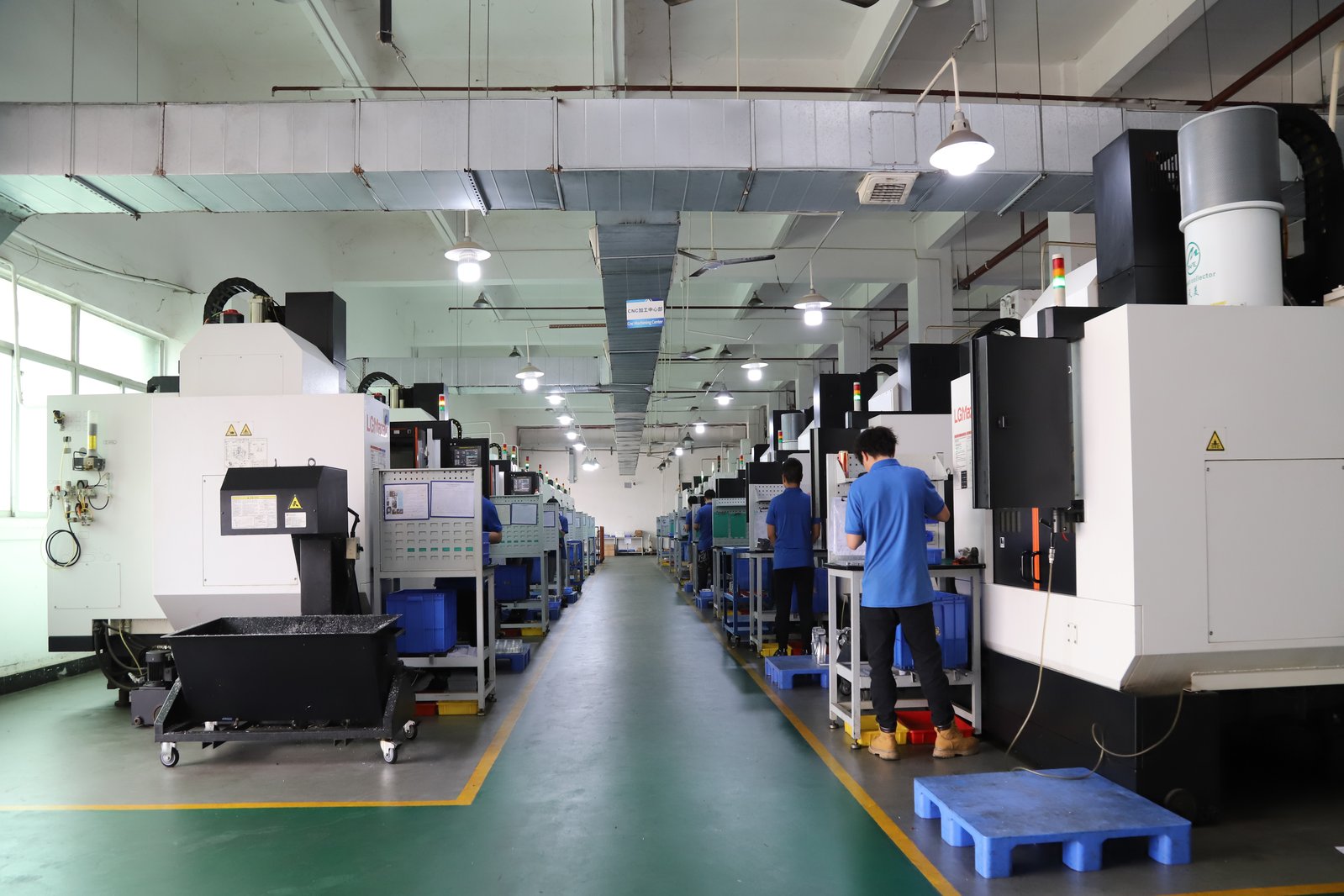
Buying machined parts from China is not a decision about a country; it is a decision about a material–process pair that happens to be produced offshore. The pair decides the tolerance, the finish, the cost curve, and the risk you carry, because a part is not just made - it is made of a material by a process, and together those two choices fix what the part can prove. Machining in China holds the familiar precision envelope, around ±0.003 mm on milled and turned features and ±0.002 mm on ground work, which is why it anchors most offshore programmes. Casting, forging, and additive are the alternatives that win specific parts, and for each the buyer also has to price the distance: the freight, the lead time, and the cost of a rejection that has to travel back. This guide compares the pairs and shows how the drawing, the volume, and the logistics combine into a decision.
- The pair, not the country: material and process together fix tolerance, finish, cost curve, and risk.
- Machining anchors the envelope: about ±0.003 mm milled and turned, ±0.002 mm ground, with Ppk ≥ 1.67 initial on criticals.
- Near-net wins volume: casting and forging suit high quantity, but the freight and rework risk price into the comparison.
- Additive wins geometry: internal channels and lattices, at low volume, with the inspection burden priced.
- The drawing is the referee: criticals, volume, and delivery window decide the pair, and the comparison is only as good as the drawing.
Why is offshore sourcing really a material–process pair decision?
A part described as "machined aluminum" is shorthand for a pair of decisions: the alloy and its condition, and the process that shapes it. The pair fixes the tolerance the shop can promise, the finish the process leaves, the unit cost curve, and the certificate trail - which is to say, everything a buyer needs to predict.
Change either half of the pair and the whole prediction changes. The same geometry in 316L instead of 6061 moves the cycle time and the cost; the same material cast instead of machined moves the tolerance envelope and adds a finishing step. Evaluating the halves separately is how offshore programmes drift from their plans.
A useful shorthand for the pair is to say it in one breath - "machined 6061-T6", "cast A356" - because a phrase that names both halves is a phrase that can be quoted, inspected, and audited without ambiguity.
The pair view also simplifies supplier selection, because most shops specialise in a band of pairs. A machine shop quoting machined aluminium and stainless is a different supplier from a foundry quoting cast iron, and matching the pair to the shop is the first filter in any sourcing exercise.
That filter applies on the supplier side of the table too: a foundry that quotes machining or a machine shop that quotes casting is a signal to slow down and ask who really does the work.
What does machining in China anchor in a sourcing portfolio?
Machining anchors the portfolio because it accepts nearly every alloy and delivers the tightest envelope. Milled and turned features hold around ±0.003 mm, ground work reaches about ±0.002 mm, and the capability expectation of Ppk ≥ 1.67 at the initial study on critical characteristics and Cpk ≥ 1.33 on general characteristics. Capability is reported per characteristic: every report names the feature, its tolerance band, the sample size, the sigma method, and the study window is a routine part of quoting controlled machine shops.
Capability is the word that matters: a pair that holds its band lot after lot is a pair you can schedule against, while one that lands inside the tolerance occasionally is a pair you can only hope about.
Capability is the word that matters: a pair that holds its band lot after lot is a pair you can schedule against, while one that lands inside the tolerance occasionally is a pair you can only hope about. Ask for the capability data on the criticals, and the pair chooses itself.Machining also anchors the schedule. A machined part in China ships from a drawing with no tooling to build, which makes it the fastest route to a first article and the natural choice for prototypes, small series, and components still under design change.
The anchor also stabilizes the programme when other pairs slip: if a casting arrives late, the machine shop can often recover the schedule by cutting the parts from solid while the tooling problem is being fixed.
That recovery lane is worth more than its face value, because it means the machine pair is the pair the programme can depend on when every other pair is late.
That recovery lane is worth more than its face value, because it means the machine pair is the pair the programme can depend on when every other pair is late. Keep that lane open by design, not as an accident of having a machine shop on the roster.The anchor role extends to the near-net alternatives: the cast and forged parts that join a programme usually still visit a Chinese machine shop for their criticals, so the same floor and the same quality system serve the whole portfolio.
When should a casting or forging pair win an offshore programme?
A casting or forging wins when the volume is high enough to justify the tooling across the ocean and when the geometry or the grain direction rewards the process. High-volume housings and load-bearing components are the classic candidates, and the tooling cost amortizes across the programme rather than per part.
The offshore comparison has to add what local sourcing does not: the tooling communication, the freight of the blanks or the finished parts, and the rework cost of a batch that must travel back. A near-net pair that wins on unit price can lose on total cost once the distance is priced.
Distance also prices into the change cycle: a tooling revision on a cast part must travel to the die shop, be proven, and ship samples back, and that loop should sit in the programme plan rather than be discovered after the first samples miss.
The drawing decides how much machining follows the near-net step. A housing with machined faces, bores, and threads carries a second leg through the machine shop, and that leg is identical whether the blank is local or offshore.
The second leg is also where the quality system stays consistent, because the same machine shop that anchors the portfolio usually cuts the criticals of the near-net parts.
When does additive manufacturing enter an offshore comparison?
Additive enters when the geometry cannot be cut or cast: internal cooling channels, conformal passages, lattices, or one-piece mechanisms. For those parts the comparison is against the assembly that machining would force, and the printed part can win even with a build cost that never falls with quantity.
Offshore printing changes the risk shape rather than removing it. The build happens far from your engineers, so the design iteration is slower and the first article carries more weight; a printed part that needs machined faces also pays for the machine visit wherever it happens.
Iteration offshore also argues for a machined prototype of the printed part before the build programme starts: one machined sample that matches the drawing gives the printer a reference that removes the ambiguity from a remote first article.
one machined sample that matches the drawing gives the printer a reference that removes the ambiguity from a remote first article. The reference sample costs one machine run and saves the printer from guessing.The practical offshore pattern is to keep printed geometry specialists close to the design team for the iterations, then transfer to a volume process - machining or casting - once the geometry is frozen and the quantity is real.
How do tolerance and surface expectations filter the pairs?
Tolerance and surface act as the first filter in every pair comparison. A component with machined criticals - press-fit bores, sealing faces, bearing journals - carries those features through every route, so the count of machined features is the fastest predictor of which pair survives.
The filter works fastest on the drawing itself: circle the machined features, and the ratio of circled to uncircled features is the pair’s verdict in one glance.
The finish the drawing names does the same work. A cast or printed surface rarely carries the roughness a sealing face needs, so the pair must include the machining or grinding step that produces it, and the pair comparison should price that step explicitly.
Where a surface is produced by a coating rather than by machining, the pair decision should include the coating house and its evidence, because an anodized finish is a supplier in its own right inside the pair.
Filtering the pairs before pricing saves the expensive part of the exercise. When tolerance and surface have eliminated casting for one component and additive for another, only the surviving pairs need a full cost model.
How should the offshore cost comparison account for distance?
The distance adds lines that local comparisons ignore: freight per shipment, customs and duty, the inventory cost of a longer lead time, and the rework cost of a rejection that must travel back to the shop. Each line is real, and each should appear in the pair comparison rather than in a footnote.
The incoterm decides where the distance cost transfers, so every pair quote should be compared on the same incoterm. A price quoted EXW and a price quoted DDP are not the same number, and comparing them directly is how offshore budgets surprise themselves.
The budget surprise usually lands in one of three lines - freight, duty, or the return of a bad batch - and naming the three lines in the plan is how the surprise is caught before it lands.
and naming the three lines in the plan is how the surprise is caught before it lands. The same three lines should sit in the supplier agreement, so when one of them moves the conversation starts from a number rather than from blame.Quantity changes the arithmetic of distance. A larger shipment spreads the freight per part and rewards the near-net pairs; small frequent shipments pay the distance on every part and reward the pairs that ship fast and light.
The volume bands of the programme should be revisited when freight rates move, because the distance line can change faster than any other line and can flip a pair decision between two quarters.
What role do documentation and quality risk play in the pair choice?
Offshore quality is carried by documents, so the pair choice is also a documentation choice. A machined pair in China arrives with a dimensional report, material certificates, and a first-article file that a controlled shop produces routinely; a cast or printed pair needs its own evidence trail, and the trail costs time to build and to check.
The quality risk of a pair is the risk that a defect travels both ways: out on the shipment and back on the correction. Pairs with well-understood process capability and standard inspection methods carry less of that risk than pairs whose acceptance methods are still being invented.
For the first offshore order of any pair, a third-party pre-shipment inspection with a defined checklist is cheap insurance. The inspection has leverage only while the parts are still in the supplier country, which is the one moment a rejection can be acted on fast.
How do you turn the pair comparison into a sourcing decision?
The decision follows the drawing and the volume. Filter the pairs by tolerance and surface, divide by quantity, test the geometry, price the survivors on the same drawing and the same incoterm, add the tooling and the freight, and choose the pair with the lowest programme total that meets the delivery window.
- Write the criticals and finishes first. They filter the pairs before any pricing begins.
- Set the volume as a range and price both ends. The winning pair can differ across the range, and both answers should be visible.
- Price every survivor on the same incoterm. The distance cost transfers where the incoterm says it does, and comparisons must match.
- Add the tooling and the freight. The programme total, not the unit price, is the number that decides.
- Carry the quality plan with the pair. The documents and the inspection method are part of the pair, not an afterthought.
When the two ends of the range choose different pairs, the programme plan should say which pair serves which tranche and when the switch happens, so the migration is planned rather than improvised.
A material–process pair chosen on the drawing, priced on the same scope, and risk-checked on its documents is a pair that performs. Machining in China will anchor many of those decisions, and casting, forging, or printing will win the parts they genuinely fit. Either way, the pair follows the drawing, and the drawing follows the function.
Frequently Asked Questions
Why is sourcing from China a pair decision and not a country decision?
Because the material and the process together fix the tolerance, finish, cost curve, and risk of the part. The country only decides where the pair is produced; the pair decides what the part can prove.
What does CNC machining anchor in an offshore programme?
It accepts nearly every alloy, holds around ±0.003 mm on milled and turned features and ±0.002 mm on ground work, ships from a drawing with no tooling, and supplies the criticals that cast and printed parts still need.
When does a casting or forging beat machining for parts from China?
At high volume, where the tooling amortizes and the material yield and grain direction reward the process - provided the freight, the tooling communication, and the rework distance are priced into the comparison.
When is additive manufacturing worth using offshore?
When the geometry is impossible to machine or cast - internal channels, lattices, one-piece mechanisms - and the design is stable enough that the slower iteration across the distance is acceptable.
What should the offshore cost comparison include?
The unit price plus freight, customs and duty, the inventory cost of the longer lead time, the tooling amortized over the programme, and the rework cost of a rejection that travels back. All quotes should be compared on the same incoterm.
How do documents affect the pair choice?
Offshore quality is carried by documents, so a pair whose evidence trail is routine - dimensional reports, certificates, first-article files - carries less risk than one whose acceptance methods are still being invented.
Should the first offshore order of a new pair be inspected by a third party?
Yes. A third-party pre-shipment inspection with a defined checklist adds leverage while the parts are still in the supplier country, which is the only time a rejection can be acted on without a long return trip.
Want the pair decision priced on your drawing?
Send the drawing, the volume range, and the delivery window and ask for the machining pair quoted against the near-net alternatives on the same incoterm. Contact the CNC Machining in China team to run the comparison.