
How Much Does CNC Machining in China Cost in 2026? A Buyer's Breakdown
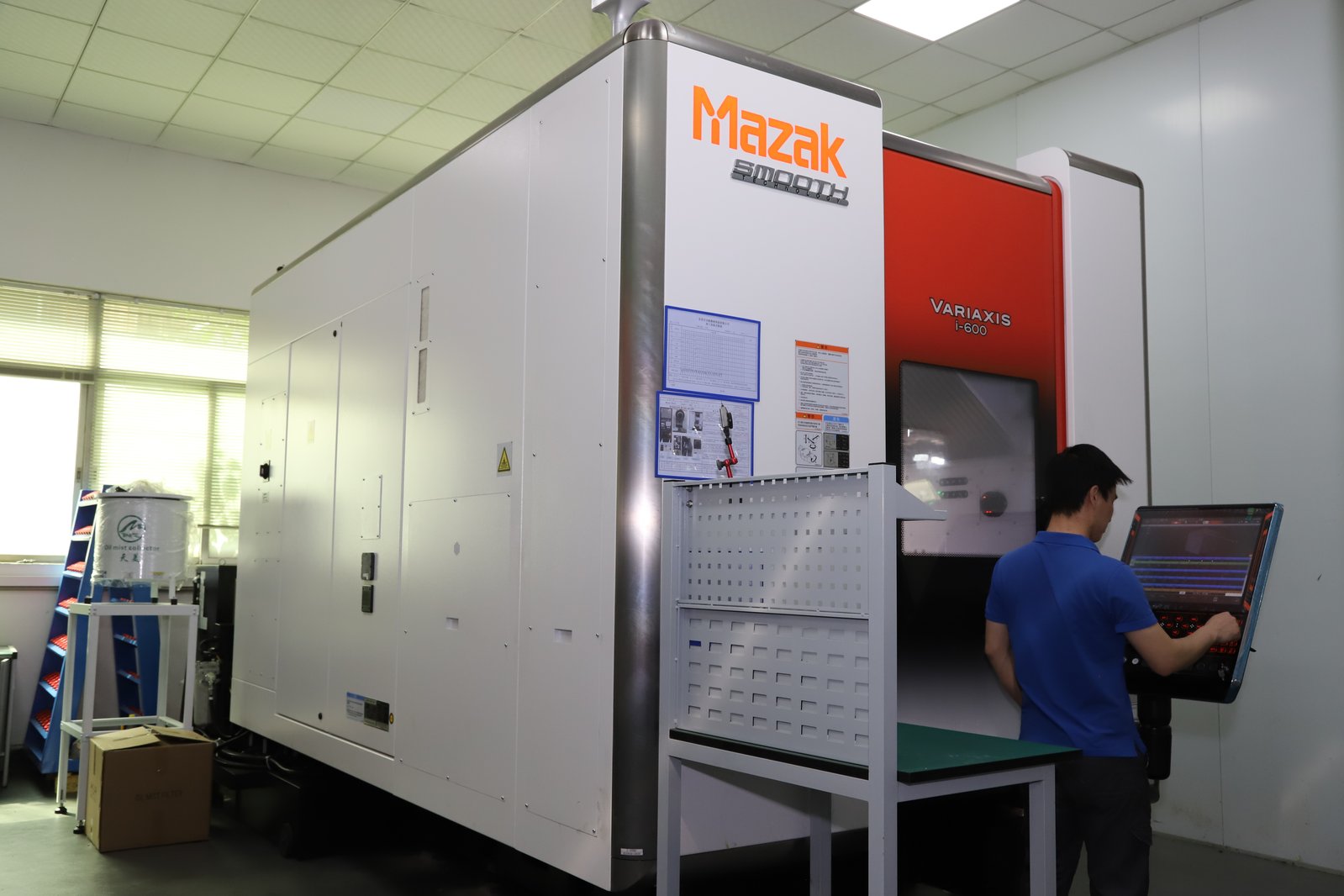
There is no honest single answer to how much CNC machining in China costs, because a machined part is priced by its drawing and its quantity, and the offshore comparison adds freight and duties to the arithmetic. What can be answered precisely is the structure: machining hours priced below a high-cost-country floor, material at world prices, tolerance-driven finishing and inspection, and the distance costs stacked on top. This guide breaks a China machining quote down the way a supplier builds it up, and shows why two quotes for the same drawing can differ by more than machining alone could explain.
What exactly is inside a CNC machining in China quote?
A useful quote is not one number; it is a stack of costs a buyer should be able to see and check. The largest line is usually the machining itself — machine hours times the shop's rate, driven by the number of setups, the operations, and the material being cut. Around it sit the material cost (stock at the grade and form on the drawing, priced at world market rates), finishing operations such as anodizing or plating, inspection work on your critical characteristics, and packaging. A quote that shows these lines lets you see where the money goes; a quote that buries them in a total is a quote you cannot negotiate against.
Two lines are specific to offshore sourcing and deserve their own attention. The first is documentation — material certificates, dimensional reports, and capability data are part of the product on a serious program, and a supplier who prices them is telling you the evidence is included. The second is the freight and duties, which may be quoted separately or folded in depending on the incoterm. When you compare two China suppliers, compare the same incoterm and the same documentation list, or you are comparing different products.
Where does the China machining cost advantage actually come from?
The offshore advantage is real and structural, but it sits in one place: the machine hour. A precision machining shop in China prices its machining hours below a high-cost-country floor because labor and overhead are lower, and for a stable, documented part the tolerance and quality capability are the same. The material is not cheaper — standard grades are priced by the world market — and the tooling is not cheaper. What a buyer sources from China is, precisely, machining time at a lower rate, and the saving grows with the part's machining content: a simple part with few operations saves less than a complex part with many.
The honest corollary is that China machining is not automatically the low-cost answer for every part. A part with almost no machining content — a simple plate that is mostly material and freight — can be cheaper bought locally, because the offshore saving is too small to cover the distance costs. The parts that win offshore are the ones with real machining content at mid-to-high volume: the hours are where the saving lives, and the drawing and documentation must be stable enough to travel. The buyer who knows where the advantage sits can also see when it does not apply.
Which part characteristics move a China quote the most?
In most quotes the ranking is geometry first, material second, tolerance third, and the ranking is the same offshore as it is locally, because the cost structure of machining does not change with geography. Geometry drives the machining hours: the number of setups, the operations, and the access difficulty of each feature. A part that needs two setups and six operations costs a fraction of one that needs five setups and twenty operations, and the hours are priced at the offshore rate either way. Material drives cutting speed and stock price: aluminum cuts fast, titanium cuts slowly.
Tolerance is usually the third lever, but it is the one buyers reach for first and often misuse. A tight tolerance does not simply add a fixed premium; it slows the finishing pass, adds measurement time, increases scrap risk, and can force a separate grinding operation. The honest sequence for cost reduction is geometry first — simplify the part, cut the setups — then material, then tolerance. When you offshore a part, this order matters more, because every machining hour you remove is an hour removed at the offshore rate, and every tolerance you relax is inspection time the supplier does not have to price defensively.
How much does the material choice alone change the price?
Material changes cost through two channels: what you pay for the stock and how fast the machine can cut it. On the stock side, standard grades are priced by the world market, so buying material in China is not where the saving lives — the supplier pays the same world price for 6061-T6 or 304 stainless as a local shop. On the cutting side the difference is large: a free-machining aluminum part cuts at high speeds with predictable chips, while a titanium or nickel part runs at conservative speeds with more tool wear, so the same geometry carries more machine hours in the expensive alloys, and those hours are the line the offshore advantage applies to.
The buyer's material lever is therefore not "find cheaper stock in China" but "specify the least expensive grade that meets the function," because every grade choice moves the machining hours that dominate an offshore quote. A part that can be 6061-T6 instead of 7075-T6, or 304 stainless instead of 17-4PH, saves on both the stock and the machining time. When you send an RFQ, name the grade and condition and ask the supplier to flag any grade that is doing more work than the function needs, and put the substitution rule in writing so the grade you approve is the grade that is cut.
How is tolerance priced, and where does tightening stop paying?
Tolerance is priced non-linearly, and the non-linearity is the same offshore as it is locally. A dimension at a general tolerance is cut with one pass and checked occasionally; a dimension at ±0.003 mm needs a controlled finishing pass, a stable setup, and measurement on a CMM; a ground feature at ±0.002 mm adds a whole operation and its own inspection. A drawing that tightens everything to the same band pays precision prices on features that never needed them, and on an offshore program the risk is compounded because a tolerance dispute travels badly across an ocean.
The discipline that works is to put tolerance where function needs it and let the rest breathe. Mark the few characteristics that carry function — locating bores, bearing seats, sealing faces — at the tight band with capability evidence at Ppk ≥ 1.67 initial, and leave clearance and cosmetic features on a general tolerance. On a machined part, pair each tight tolerance with the finish the function needs, because the two are produced and measured together. When you offshore a part, the inspection plan should be in the RFQ: which features are measured on a CMM, which instrument wins if numbers disagree, and what the report will contain.
How do quantity and batch size change the per-part price?
Quantity changes the per-part price through setup amortization and process learning, not through magic. Every job carries fixed costs — programming, fixturing, first-article inspection — and those costs spread thinner as the quantity rises. A single prototype carries the full setup cost on one part; a run of a hundred spreads it a hundred ways; a run of a thousand starts to amortize a more efficient process. The per-part price falls quickly from one to a few dozen, then more slowly, and it flattens once the setup cost is negligible against the run.
Two buyer facts follow. First, the MOQ question matters less than the setup-cost question: a supplier with a 1-piece MOQ can still quote a single part fairly, because the quote simply carries the full setup on that one piece. Second, order in rounds that match your real demand rather than chasing the lowest per-part price at a quantity you do not need — the inventory cost of over-ordering can erase the machining saving, and on an offshore program the inventory sits in transit and in your warehouse. Ask for pricing at the quantity you need and one tier above it, so you can see where the curve flattens.
What does sourcing from China add to — or remove from — the total cost in 2026?
The offshore cost picture is the machining saving minus the distance costs, and both halves deserve deliberate math rather than a rule of thumb. The saving is the difference between the offshore machine-hour rate and your local alternative, applied to the machining content of the part. The distance costs are freight, customs and duties, payment costs, and the cost of managing a remote supplier — inspection time, communication, and the risk that a problem costs weeks instead of days to resolve. In 2026, freight rates have been volatile and duty treatment varies by product and destination, so the landed-cost calculation has to be run per shipment rather than assumed from a previous year.
The buyer's mitigation is structural. Quote on a defined incoterm so you know which side owns the freight and the risk at each point. Get the freight quoted separately so it can be compared. Consolidate shipments where the schedule allows, so the freight cost per part falls. And put the documentation requirements in the RFQ — a supplier whose material certificates and dimensional reports arrive with the parts costs less to manage than one you must chase, and that difference is part of the price either way.
Which cost levers can a buyer pull without changing the function?
The cost levers that do not touch function are the ones worth pulling first, and on an offshore program they concentrate in the drawing and the RFQ. Relax non-functional tolerances so the inspection effort goes where it matters. Reduce the setup count by designing features that machine in the same orientation. Choose the least expensive grade that meets the load, and confirm the finish callouts are the ones the surfaces actually need. State the real quantity so the setup amortization is honest, and put the documentation requirements in the RFQ so they are priced once rather than renegotiated per order.
Two levers are specific to offshore sourcing. Consolidate your part numbers into fewer releases so the supplier can batch setups and you pay freight fewer times. And design the release so the first article is reviewed before the production quantity ships — a drawing or process problem caught at the first article costs days; one caught after a full shipment costs weeks and a return leg. On a serious program these levers add up to more than any discount a supplier offers, because they attack the structure of the cost rather than the margin on it. The services page on this site explains how a quote is built and what the supplier needs to price it tightly.
What belongs in a cost-focused RFQ so the quotes are comparable?
A cost-focused RFQ is a small document with specific content, and its job is to make supplier quotes comparable rather than merely present. Send a STEP or IGES model plus a 2D PDF that names the material grade and condition, the general tolerance, and the GD&T on the characteristics that matter. State the quantity, the target date, and the incoterm you want priced. Ask for the quote in a defined structure — material, machining, finishing, inspection, and freight as separate lines — so you can see where the differences between suppliers actually are. And list the documentation that must ship with the parts.
Two questions turn a quote comparison into a cost decision. First, ask each supplier what in your drawing is costing more than it needs to — the answers are a free DFM review, and the differences tell you which shop read the drawing. Second, ask for the tolerance and capability plan: which features at ±0.003 mm milling or turning, which at ±0.002 mm grinding, and how each is verified. A supplier who answers with a process plan is quoting the part; one who answers with a number is quoting the hope of it. For the questions buyers raise when comparing offshore quotes — lead times, certificates, and documentation — the FAQ page on this site answers them directly, and the quality page shows the inspection evidence that makes a cost comparison honest.
Frequently Asked Questions
How much does CNC machining in China cost?
No honest shop quotes a machined part without a drawing, because the price is set by the geometry, the material, the tolerance-and-finish pairs, and the quantity. For a stable, documented part at mid volume, the offshore machine-hour rate usually lands at a lower total landed cost; the comparison must include freight and duties.
Where does the China machining saving actually come from?
From the machine hour, not the material. A China shop prices machining hours below a high-cost-country floor, while standard material grades are priced by the world market everywhere. The saving grows with the part's machining content, which is why complex, hour-heavy parts are the strongest offshore candidates.
What drives the price of a machined part most?
Geometry first — the number of setups and operations — then material, then tolerance. Geometry sets the machining hours, material sets the cutting speed and stock price, and tolerance adds finishing and inspection cost. Reducing cost means attacking the levers in that order.
Does a tight tolerance always add a lot of cost?
Not always, but often more than expected, and non-linearly. The jump to a controlled finishing pass and CMM inspection costs real money; the jump to a ground feature adds an operation. Tighten only the features that carry function, and put the inspection plan in the RFQ when the supplier is offshore.
How does material choice change the quote?
Through the stock price and the cutting speed. Standard grades are priced by the world market, so the saving is in specifying the least expensive grade that meets the function. Titanium and nickel alloys add the most because they cut slowly and wear tools, adding machining hours at any rate.
What is total landed cost, and why compare it instead of the unit price?
Total landed cost is the unit price plus freight, customs and duties, payment costs, and your inspection and management time on a remote supplier. Two suppliers can quote the same unit price and land the parts at very different total costs, which is why the incoterm and the freight must be part of the comparison.
What should I compare when I get quotes from two China suppliers?
Compare the same quote structure — material, machining, finishing, inspection, and freight as separate lines — the same documentation list, and the same incoterm. Two suppliers quoting the same part on different structures are quoting different products, and comparing them is how buyers end up surprised by landed cost.
Want a CNC machining in China quote that shows the cost structure instead of hiding it?
Send the drawing, the material grade, and the quantity to [email protected] or call +86 13126536955. You will get back a quote with the material, machining, finishing, inspection, and freight lines stated, the DFM notes on where cost is hiding, and a delivery date that holds.